
Phyllis and the Ladybugs
22 min. 2024
Directed by Ann Verrall & Phyllis Googoo
Associate Producer: Cassandra Googoo
Consultants: Andrea Currie, Ariella Pahlke
Synopsis
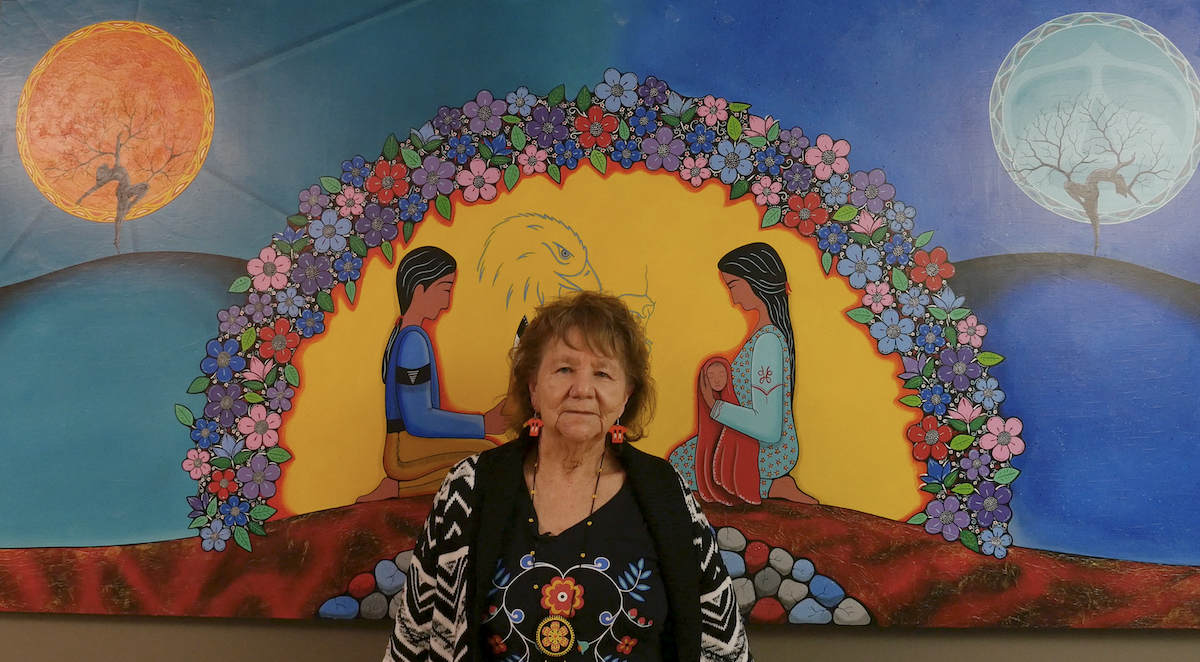
Phyllis and the Ladybugs is the story of Mi’kmaq Elder Phyllis Googoo’s journey from 1948 as a frightened 4-year-old at the Shubenacadie Residential School in Nova Scotia, (the only residential school in Atlantic Canada) to sharing her story of survival with the Pope in Rome in 2022. As a child, she was forbidden to speak her language. To preserve it she secretly spoke Mi’kmaq to the ladybugs. Phyllis never lost her language. She raised her children to be fluent speakers and taught Mi’kmaq at We’koqma’q Mi’kmaw School in We’koqma’q First Nation, Cape Breton Nova Scotia. This creative collaboration between Phyllis and Halifax filmmaker Ann Verrall, was inspired by Phyllis’ deep desire to share her story so that there will be greater understanding of today’s Indigenous youth. In April 2023 Phyllis returned to spirit as her film played in her hospital room. Phyllis’ gentle warrior spirit continues to resonate through her family, students, contributions to community, and through her creative work.
Phyllis & the Ladybugs – the journey of making the film
This film could not have been made without the generosity and collaboration of Phyllis and her family.
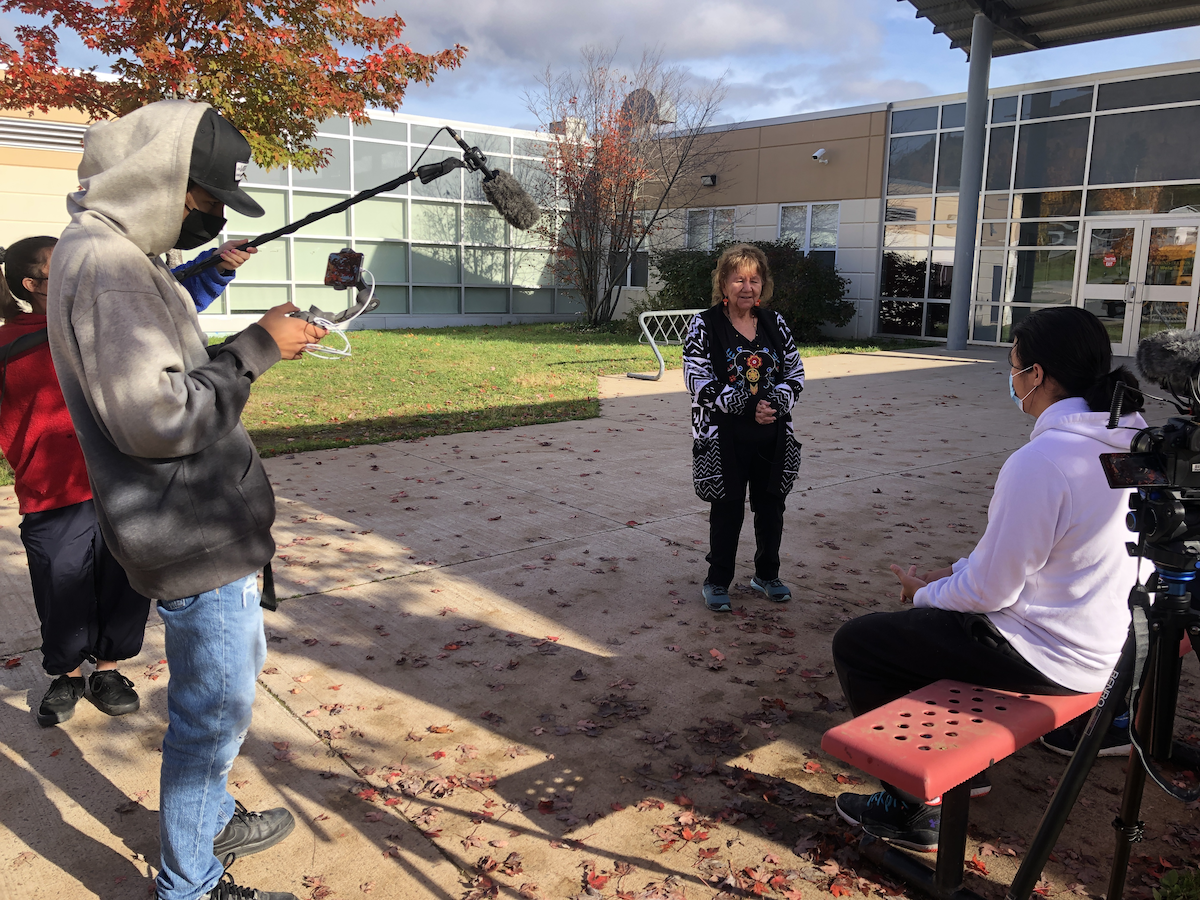
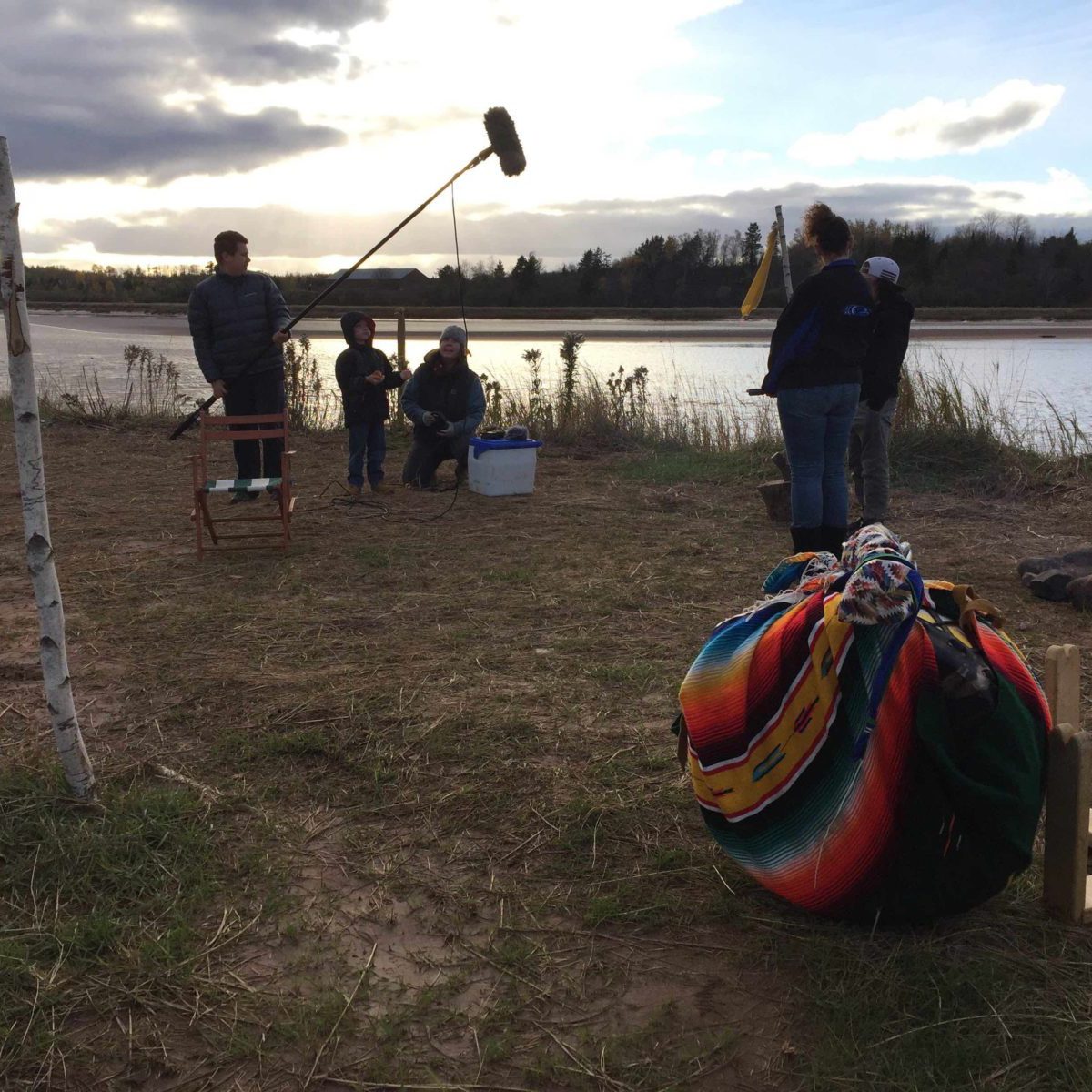
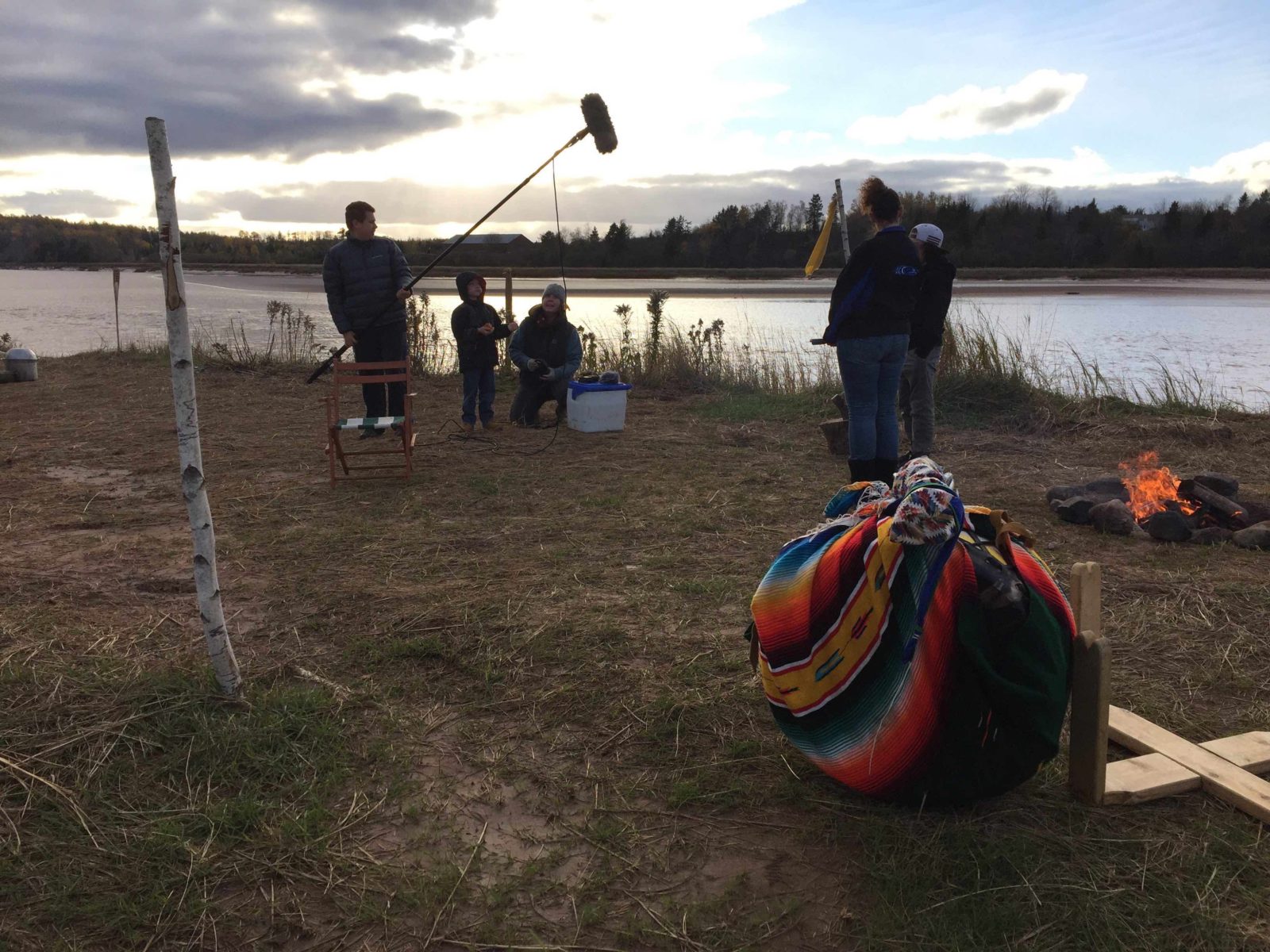
The process of making the film started with Phyllis in 2019, who at the time, was Elder in Residence at We’koqma’q Mi’kmaw School in We’koqma’q First Nation, Cape Breton Nova Scotia. She told her story to Rob Smith, the media/film teacher. I had done three previous collaborative video projects with the school, so Rob contacted me with the idea to do another project with Phyllis and the students. By the time we received funding to begin, COVID had erupted and doing anything with the school or students was impossible. So, we began in October 2020 with filming outside with Phyllis and her great granddaughter, Sandreya Johnson.

In November 2020 we filmed with Phyllis at the site of the Shubenacadie Residential School. Andrea accompanied Phyllis as she walked through the site sharing her memories.

Phyllis & Andrea at the former Shubenacadie Residential School site, Nov. 2020

Shubenacadie Residential School site: L-R Ariella Pahlke, Andrea Currie, Phyllis Googoo, Ann Verrall (photo: Ariella Pahlke)
In August 2021, Ariella and I went back to see Phyllis to film a family dinner. It is then that we met her granddaughter, Cassandra Googoo. In May of that year, the discovery of the 215 unmarked graves at a former residential school in Kamloops BC, made a huge impact. During the dinner preparations, Phyllis and Cassandra share the impact of that discovery on them. We realized this too needed to be included in the story.

Phyllis teaches Sandreya how to make tea biscuits.

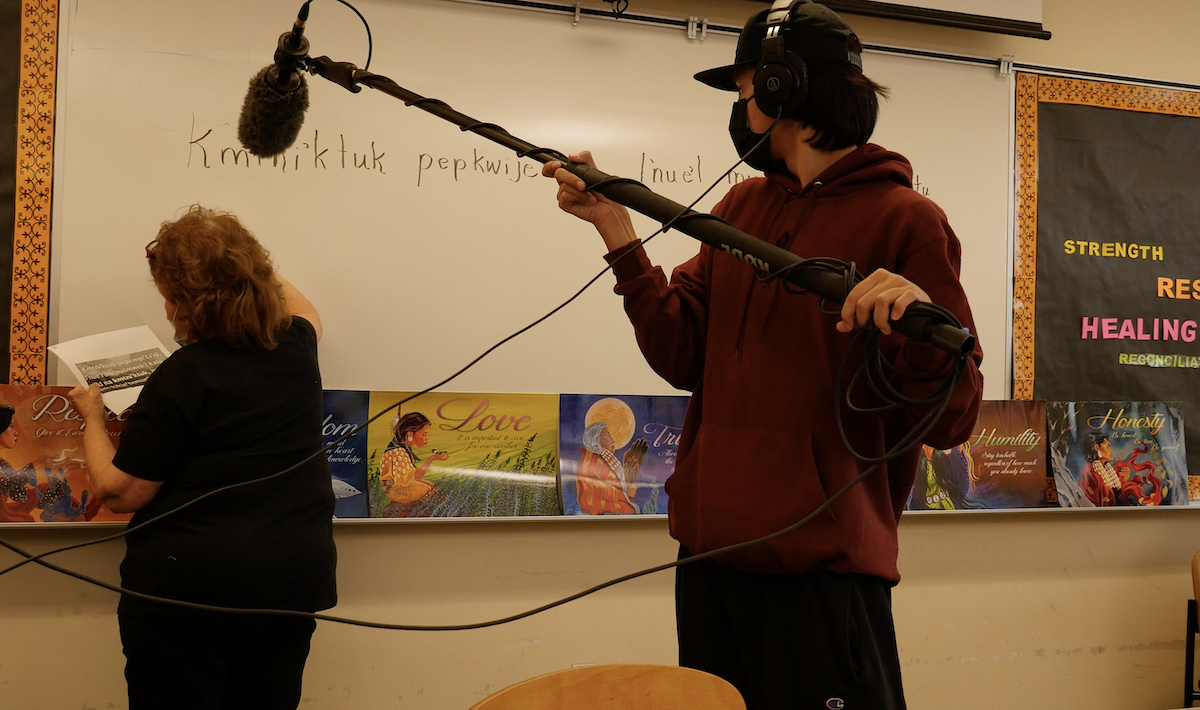
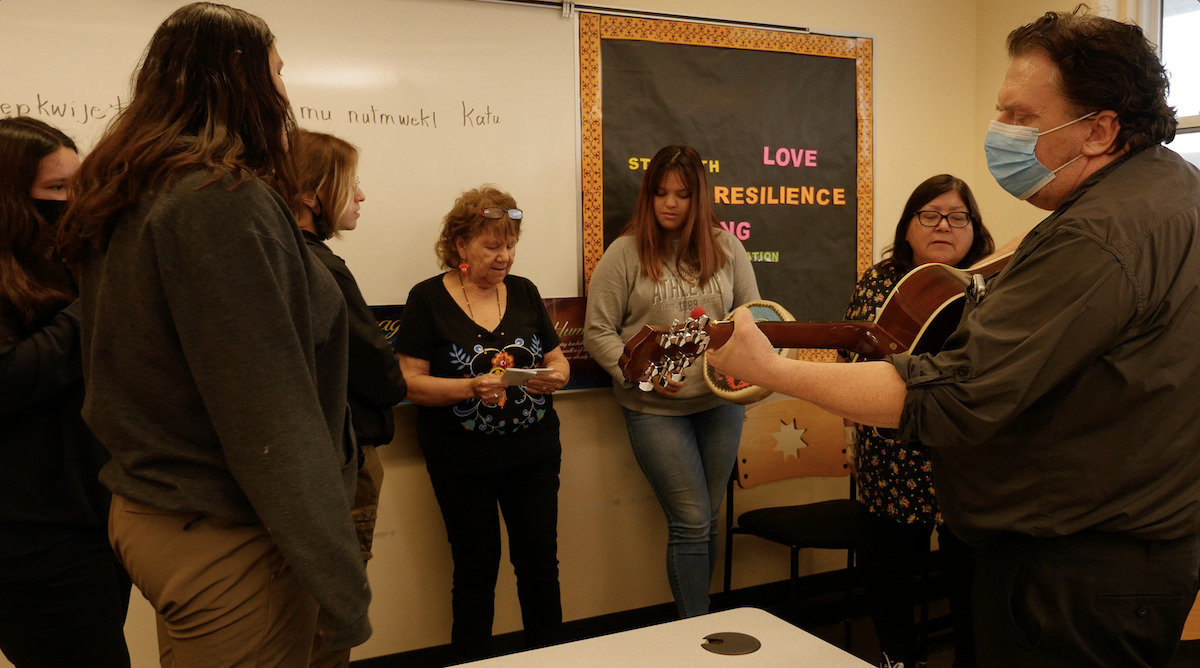
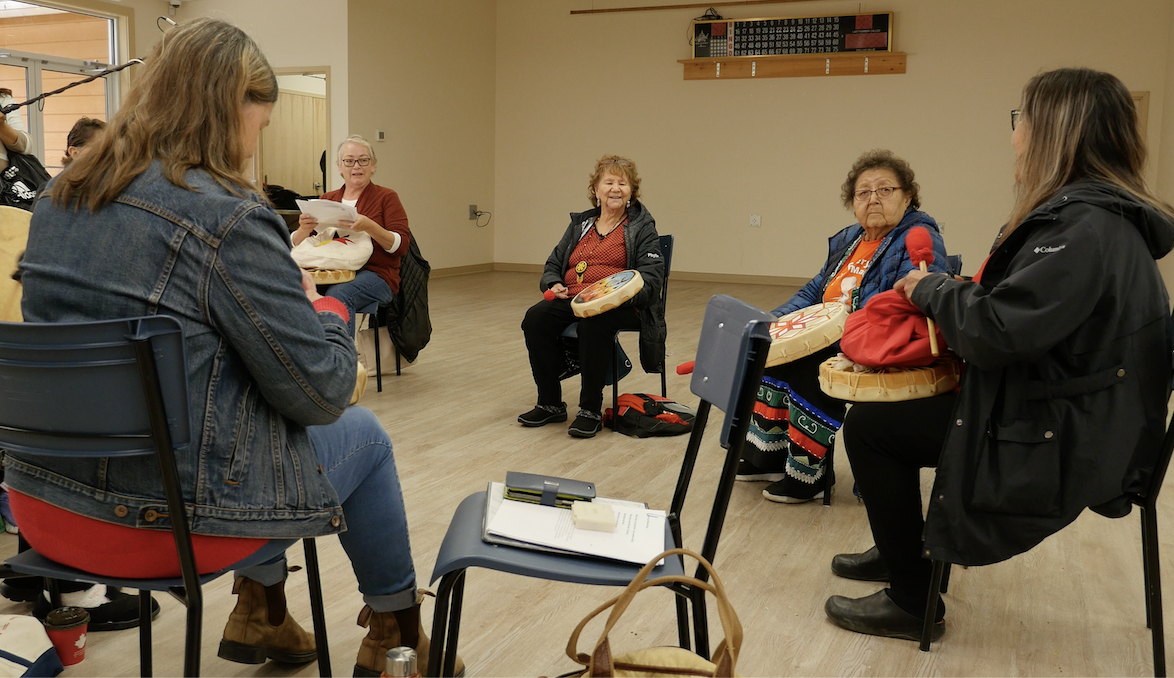
By October 2021 we were able to enter the school and so began to include the students in the process of filming with Phyllis. By that time Phyllis had also learned that she would be in the delegation of Indigenous people heading to Rome to ask the Pope for an apology. Phyllis decided to teach the students the Mi’kmaq version of an important song for her – “Drums” written by Peter La Farge. The Mi’kmaq version Pepkijtemaqn was translated by Ann Marchand and Jarrett Francis and originally performed by Kylie Francis. We also filmed and recorded, with student assistance, the We’koqma’qewiskwa’q drumming group that Phyllis and Andrea were part of.